
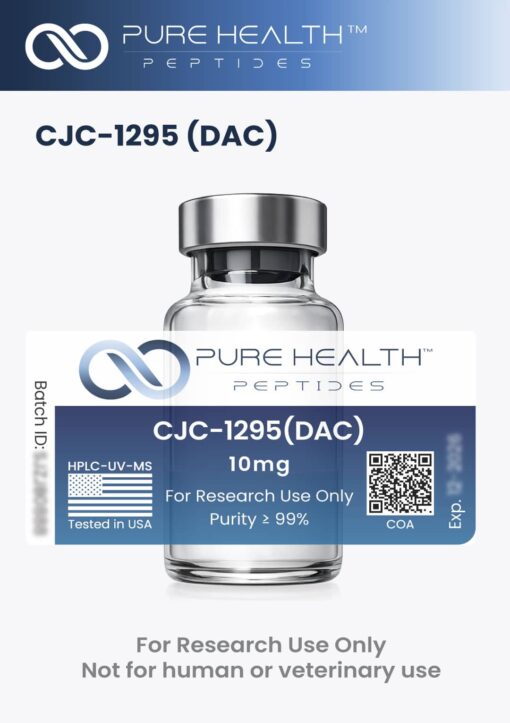
CJC-1295 (DAC) – Premium Research Peptide Overview for Advanced Applications
CJC-1295 (DAC) is a highly studied synthetic analog of growth hormone-releasing hormone (GHRH), widely recognized in biochemical and peptide research for its extended half-life and sustained activity profile. As interest in advanced peptide science continues to grow in the USA, CJC-1295 (DAC) has become a focal point for researchers exploring growth hormone secretagogue pathways and long-acting peptide signaling mechanisms.
This compound is often associated with “Pure health peptide” discussions due to its role in modern peptide research and its reputation for stability, potency, and prolonged biological activity when compared to shorter-acting alternatives.
What Makes CJC-1295 (DAC) Unique?
CJC-1295 (with Drug Affinity Complex, DAC) is engineered to bind to albumin in the bloodstream, significantly extending its half-life. This allows for sustained stimulation of growth hormone release pathways in research environments, making it a powerful and innovative tool for scientific investigation.
Unlike shorter peptide chains that degrade quickly, CJC-1295 (DAC) provides researchers with a longer window of activity, enabling more consistent observation of hormonal response patterns. This feature has made it a preferred compound in experimental endocrinology and peptide-based studies.
Scientific Interest and Research Applications
In laboratory settings, CJC-1295 (DAC) is commonly evaluated for its interaction with pituitary receptors and its influence on natural growth hormone secretion cycles. Researchers are particularly interested in:
- Long-acting GHRH analog behavior
- Hormonal pulse modulation and secretion patterns
- Protein binding efficiency via DAC technology
- Sustained peptide stability in biological systems
This breakthrough compound continues to attract attention in peptide research communities due to its ability to maintain elevated activity levels over extended periods compared to traditional analogs.
Why Researchers Focus on CJC-1295 (DAC)
The growing demand for long-acting peptide analogs in the USA research space has placed CJC-1295 (DAC) in a premium category of investigational compounds. Its design allows for fewer administrations in experimental setups, making it highly efficient for controlled studies.
Key reasons for its popularity include:
- Extended half-life supported by DAC technology
- Stable molecular structure for consistent research outcomes
- High binding affinity to serum albumin
- Reliable performance in controlled laboratory environments
These characteristics make it a powerful and elite-grade peptide model for studying endocrine system responses.
Quality Considerations in Peptide Research
When working with peptides like CJC-1295 (DAC), researchers prioritize purity, synthesis standards, and verification of compound integrity. High-quality peptides are essential for ensuring accurate and reproducible results in scientific studies.
The concept of “Pure health peptide” is often associated with rigorous manufacturing standards, third-party testing, and precise molecular formulation to maintain consistency across research batches.
Important Research Disclaimer
CJC-1295 (DAC) is intended strictly for laboratory and research purposes only. It is not approved for human consumption, medical treatment, or therapeutic use outside controlled scientific environments. Researchers must comply with all applicable regulations and ethical guidelines when handling this compound.
The Future of Peptide Innovation
As peptide science advances, compounds like CJC-1295 (DAC) continue to play a critical role in expanding understanding of hormonal regulation and protein signaling pathways. Its long-acting properties represent a significant step forward in synthetic peptide engineering, offering researchers a cutting-edge tool for experimental exploration.
The ongoing development of GHRH analogs suggests that peptides in this category will remain central to biochemical innovation in the USA and beyond, especially in studies focused on metabolic signaling and endocrine response modeling.
| Quantity | 5MG, 10MG |
|---|
Be the first to review “CJC-1295 (DAC)”
Related products
Vials

Vials
Vials
Vials
Vials
Vials
Vials
Reviews
There are no reviews yet.